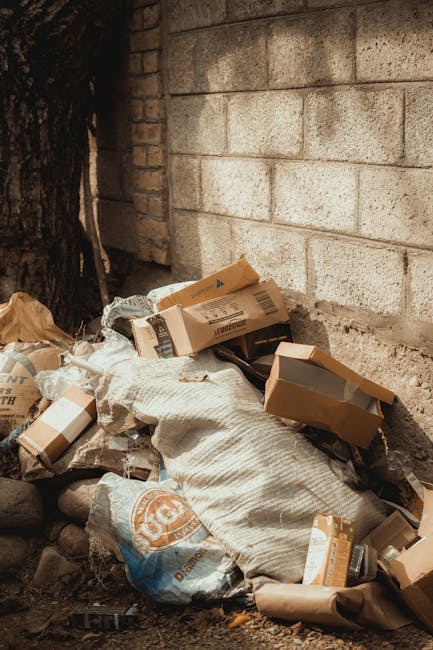
Avoid hidden rubbish removal charges in Highbury
If you have ever booked a rubbish removal job and then seen the final bill creep up, you will know the feeling: a quick quote at the start, then extra fees for access, lifting, sorting, waiting time, or something that was supposedly "not included". That is exactly why learning how to avoid hidden rubbish removal charges in Highbury matters. Whether you are clearing a flat, a loft, a garage, or an office, the difference between a fair price and a frustrating one often comes down to the questions you ask before anyone turns up with a van. This guide breaks it down clearly, with practical checks, real-world examples, and a few small things people often miss until it is too late.
Table of Contents
- Why it matters
- How it works
- Key benefits and practical advantages
- Who this is for and when it makes sense
- Step-by-step guidance
- Expert tips for better results
- Common mistakes to avoid
- Tools, resources and recommendations
- Law, compliance, standards, or best practice
- Options, methods, or comparison table
- Case study or real-world example
- Practical checklist
- Conclusion
- Frequently asked questions
Why Avoid hidden rubbish removal charges in Highbury Matters
Hidden charges are not just annoying. They can completely change how you judge a service. A quote that looked reasonable at first can become poor value if the final invoice includes extras you were never warned about. In Highbury, where homes and businesses often deal with tight streets, stairs, limited parking, and shared entrances, those extra costs can appear quickly if the job has not been priced properly from the start.
To be fair, some add-ons are legitimate. If a crew needs to carry items down several flights of stairs, remove unusually heavy furniture, or deal with restricted access, those factors can affect the cost. The problem is not extra pricing itself. The problem is when it is vague, unexpected, or described too late to help you compare offers properly.
That is where clear pricing becomes valuable. A proper rubbish removal quote should help you understand what is included, what could change the price, and what information the company needs from you to give an accurate estimate. If a provider also publishes clear pricing and quotes, that is usually a good sign that they are used to dealing with customers who want certainty, not surprises.
Expert summary: the cheapest quote is not always the cheapest job. A truly fair rubbish removal price is the one that stays close to the estimate because everything was explained properly before the van arrived.
How Avoid hidden rubbish removal charges in Highbury Works
The process is actually quite simple once you know what to look for. Most rubbish removal companies price jobs using a combination of volume, weight, labour, access, and disposal type. A flat, easy-ground-floor collection of a few bags is one thing. A third-floor clearance with bulky wardrobes and awkward access is another entirely.
In practice, hidden charges tend to show up when one of three things happens: the waste was described too vaguely, the access situation was not explained, or the customer assumed a "from" price was fixed. That is why a proper quote request should cover the essentials up front. What needs collecting? How much of it is there? Can a vehicle park close by? Will the team need to enter a property, go upstairs, or dismantle anything?
Some companies also split jobs into categories, such as household rubbish, garden waste, builders' waste, or specialist items. That matters because different waste types can carry different disposal and handling requirements. For example, if you are looking at a builders waste clearance, the pricing logic may differ from a standard household collection. Likewise, a job involving fridge and appliance removal may be treated differently from soft furnishings or general junk.
In the end, the best way to avoid hidden rubbish removal charges in Highbury is to treat the quote as a two-way conversation, not a one-line number. The more accurately you describe the job, the less room there is for awkward surprises later.
Key Benefits and Practical Advantages
Knowing how to spot charge traps gives you more control, and honestly, that is half the battle. When you understand the pricing model, you can compare services properly instead of just scanning the headline number and hoping for the best.
- Better budget control: you can plan for the real total rather than a best-case guess.
- Cleaner comparisons: you can compare like with like when reviewing different quotes.
- Less stress on the day: nobody enjoys a last-minute price debate on the pavement.
- Faster booking decisions: once the cost structure is clear, booking becomes simpler.
- Fewer disputes: good paperwork and clear expectations reduce friction later.
There is also a quality-of-service angle here. Providers who explain their pricing clearly tend to be more organised in other areas too: arrival times, communication, waste handling, and safety. That does not guarantee perfection, of course, but it is a strong clue.
If you are sorting a larger project, such as a full property clearance, this clarity matters even more. A job like house clearance or home clearance often involves a mixed load, and mixed loads are exactly where people get caught out if they do not ask detailed questions first.
Who This Is For and When It Makes Sense
This advice is useful for just about anyone arranging waste collection, but it is especially relevant if you are in one of these situations:
- You are clearing a flat or maisonette and access is a bit awkward.
- You are emptying a loft, garage, or basement where the amount of waste is hard to estimate.
- You are disposing of bulky furniture and want the price confirmed in advance.
- You are a landlord or letting agent managing a time-sensitive turnaround.
- You are a small business wanting a tidy, predictable cost for regular or one-off removals.
It is also sensible when you are dealing with specialised items. For instance, a sofa, mattress, or appliance can create different handling needs. Services such as mattress and sofa disposal or furniture disposal may look straightforward, but the actual cost can depend on lifting, dismantling, and where the item needs to be taken from.
Sometimes people assume hidden charges only happen on big jobs. Not really. A small collection can still become expensive if the company adds "minimum load", "call-out", or "congestion" style charges that were never properly discussed. Small job, same headache.
Step-by-Step Guidance
Here is a practical way to reduce the risk of surprise fees before you book anything.
- List exactly what needs removing. Be specific. "A few bits of rubbish" is not enough. Say whether it is bags, broken furniture, old appliances, or builder offcuts.
- Estimate the volume honestly. If you are unsure, take photos from a couple of angles and include a wide shot. A good quote depends on seeing the scale of the job.
- Explain access conditions. Mention stairs, narrow hallways, no lift, parking restrictions, locked gates, or loading distance. This is where quotes often change.
- Ask what is included. Check whether labour, loading, disposal, parking, congestion, and VAT are all covered. Don't assume. Really don't.
- Ask what could increase the price. A transparent provider should tell you in advance what would count as an extra charge.
- Confirm how specialist items are treated. Items like fridges, confidential material, or hazardous waste can need separate handling.
- Get the quote in writing. Even a short email summary is better than a phone call you cannot remember later.
- Check the payment terms. Make sure you understand when payment is due and what methods are accepted.
- Keep a copy of photos and messages. If there is ever a disagreement, the paper trail helps.
If you are booking through a web form, a page like book online can be useful because it encourages you to capture the details properly before the job is confirmed. That simple step can save a fair bit of back and forth later on.
One small but important point: if something changes after the quote, say so immediately. A last-minute extra sofa or a pile of garden waste added to the job can change the price. The honest thing is to update the details before collection day, not afterwards when everyone is standing around the front door.
Expert Tips for Better Results
A few habits make a big difference. We see this over and over again, and it is usually the customers who do the small things well who have the smoothest experience.
- Use photos, not just descriptions. Photos help a company judge size, access, and load type far more accurately than guesswork.
- Group items by type. Keep general rubbish, furniture, and specialist waste separate where possible. It helps the quote stay precise.
- Ask about loading time. If the team has to wait while items are sorted, that can affect cost on some jobs.
- Be clear about what stays. If some items are staying in the property, mark them or move them out of the way. It avoids confusion.
- Consider disposal routes early. If you know some items are reusable, recyclable, or sensitive, tell the provider.
- Check the company's trust pages. Pages on insurance and safety, payment and security, and terms and conditions can tell you a lot about how seriously they handle the basics.
Here is a tiny real-world example. Someone in a Highbury flat might describe a "small clear-out" and then the crew arrives to find three bookcases, a broken treadmill, two sacks of clothes, and a heavy mattress sitting at the top of a narrow staircase. It is not that the provider is being difficult if the price changes; it is that the original description was, well, optimistic. Happens all the time.
Another helpful move is to ask about sorting and recycling. If a provider talks clearly about recycling and sustainability, it usually suggests a more thoughtful disposal process, which can be especially reassuring if you care about what happens after the collection.
Common Mistakes to Avoid
Most surprise charges come from the same handful of mistakes. Once you know them, they are easy enough to avoid.
- Booking on price alone. The lowest headline figure is not a win if the final bill grows quietly.
- Giving vague descriptions. "A garage full of stuff" does not help anyone price the job properly.
- Ignoring access issues. Stairs, parking, and distance from the vehicle all matter.
- Not asking about excluded items. Some waste types may need separate arrangements.
- Assuming lifting is always included. Sometimes it is, sometimes it is limited. Ask.
- Forgetting about quantity changes. If the pile grows overnight, the quote may need to be revisited.
- Not reading the small print. It is dull, yes. But it can save money.
People also overlook property-specific jobs. A loft clearance can look simple from below, but once someone starts bringing things down, the time and effort involved becomes very different from a ground-floor collection. The same goes for a garage clearance where everything is stacked behind bikes, boxes, or tools.
One line worth remembering: if the quote feels too quick, it may be too loose.
Tools, Resources and Recommendations
You do not need fancy tools to avoid hidden rubbish removal charges. A phone, a few photos, and a clear checklist are usually enough. Still, a couple of simple resources can make things easier.
- Your phone camera: take wide shots and close-ups of awkward items.
- A simple notes app: list item types, number of floors, and any access restrictions.
- Measuring tape: helpful for bulky furniture, appliance sizes, or space limitations.
- Payment confirmation emails: useful if you need to refer back to what was agreed.
For specific household or office situations, the following pages may help you understand what service type fits your job:
- office clearance for workplace furniture, documents, or equipment.
- business waste removal for commercial collections and ongoing needs.
- flat clearance if you are dealing with smaller residential properties and shared access.
- waste removal for broader general collections.
If you are ever unsure about whether an item is acceptable, a quick look at what can go in a skip can help you think through what is likely to be straightforward and what may need a separate conversation.
Law, Compliance, Standards, or Best Practice
When rubbish is collected, the work does not end at the kerb. Waste handling in the UK is subject to proper expectations around safe transport, lawful disposal, and responsible handling of different waste types. You do not need to become a compliance expert to book a collection, but it does help to know the basics.
Best practice usually means the provider should:
- describe pricing clearly and honestly;
- handle waste appropriately for the type involved;
- take reasonable care with loading and safety;
- avoid mixing unsuitable waste where separate handling is needed;
- be clear about payment terms and customer obligations.
For certain items, extra care matters. Electricals, appliances, confidential material, or anything that could be classed as hazardous should not be treated as generic rubbish. If the job includes items like a fridge, chemicals, paints, or sharp waste, it is sensible to ask whether the provider offers the right handling route, such as hazardous waste disposal or specialist appliance removal.
Likewise, if you are disposing of items that contain personal information, it is worth asking about secure handling. A service such as confidential shredding can be relevant for offices and home workers alike, especially when clear-out day turns up old files, records, or paperwork you forgot was even there.
Trustworthy companies usually make their policies visible. That is why pages such as health and safety policy and about us can matter more than people first think. They give you a feel for how the business works before anyone is on site.
Options, Methods, or Comparison Table
There are a few common ways people clear waste in Highbury. Each has advantages, but each can also carry different cost risks if you are not careful.
| Method | Best for | Where hidden charges can appear | What to check first |
|---|---|---|---|
| On-demand rubbish removal | Quick domestic or business collections | Access, labour, heavy items, unsorted waste | What is included in the quote? |
| Flat or house clearance | More complete property clear-outs | Extra rooms, stairs, mixed item types, time on site | How the property is assessed and priced |
| Furniture-only disposal | Single bulky items or a few pieces | Dismantling, carrying distance, weight, exclusions | Whether lifting and disposal are included |
| Builders waste clearance | Renovations, strip-outs, and refurbishment debris | Weight-based pricing, restricted materials, loading time | What counts as builders' waste versus general waste |
| Skip-based disposal | Jobs you can load yourself over time | Permit, overfilling, restricted waste types, hire extensions | What can go in a skip and what cannot |
For many customers, a van-based collection is the most convenient because it includes loading. But if you have time, muscle, and enough space, a skip may make more sense for ongoing work. It depends on the job, not the marketing gloss. Simple as that.
Case Study or Real-World Example
Imagine a Highbury landlord preparing a one-bedroom flat for a new tenant. The job includes a worn sofa, a bed frame, assorted bags from the cupboard under the stairs, and a few old kitchen bits. At first, it sounds small. Then the reality becomes clearer: the flat is on the second floor, parking is tight, and the sofa has to come through a narrow hallway with one awkward turn.
In a rushed booking, the customer might have accepted the first rough estimate and then been surprised when the crew explained the access limitations on arrival. That is the kind of moment where complaints usually begin. Not because anyone is deliberately trying to overcharge, but because the job was not described with enough detail.
Now compare that with a better approach. The landlord sends photos, mentions the floor level, explains the parking issue, and confirms the item list in advance. The quote is a little more precise, but the final bill is far less likely to drift. The job runs faster, the tenant turnaround stays on track, and no one ends the day feeling short-changed.
That is the real value here. It is not just about saving money. It is about removing friction from the whole process.
Practical Checklist
Use this quick checklist before you confirm any rubbish removal booking in Highbury.
- Have I listed every item that needs removing?
- Have I sent clear photos from more than one angle?
- Have I mentioned stairs, parking, or access restrictions?
- Do I know whether labour and disposal are included?
- Have I asked about extra charges for heavy or awkward items?
- Do I understand how specialist waste will be handled?
- Have I received the quote in writing?
- Do I know the payment terms before collection day?
- Have I checked the company's safety and policy information?
- Am I comfortable that the price is clear, fair, and complete?
If you can answer yes to most of those, you are in a much better position. Not perfect, maybe, but far safer than guessing.
Conclusion
Hidden charges are usually avoidable. That is the reassuring part. When you give a detailed description, ask direct questions, and get clarity on what is included, you make it much harder for a quote to drift into surprise territory. In Highbury, where access, property layout, and item mix can vary from one job to the next, that clarity is especially valuable.
The main thing to remember is this: do not compare rubbish removal quotes by headline price alone. Compare the whole picture. Look at what is included, what could change, and how the provider explains the job. A transparent service may not always be the cheapest at first glance, but it is often the one that feels cheapest once everything is done properly.
Get a free quote today and see how much you can save.
And if you are still weighing things up, take a breath, gather the photos, and ask the awkward questions now rather than later. That small bit of prep can save a lot of hassle, and honestly, it makes the whole thing feel much calmer.
Frequently Asked Questions
What counts as a hidden rubbish removal charge?
It is any extra fee that was not made clear before booking, such as unexpected labour charges, access fees, minimum-load costs, or added disposal costs.
How do I avoid surprise fees when booking waste collection in Highbury?
Give a detailed item list, share photos, explain access conditions, and ask exactly what is included in the price. Getting the quote in writing also helps a lot.
Why do rubbish removal prices change after the quote?
They usually change because the job was bigger, heavier, or more difficult than described, or because certain items needed specialist handling.
Should a quote include labour and disposal?
Usually, yes, but not always in the same way. That is why you should ask whether loading, transport, and disposal are all part of the stated price.
Are stairs and parking usually extra?
Sometimes they are, especially if access is limited or the job takes more time than expected. Always check before confirming the booking.
Is the cheapest rubbish removal quote always the best choice?
No. A very low quote can leave out important parts of the job. The best value is usually the quote that explains everything clearly from the outset.
What should I do if I think I have been overcharged?
Review the quote, the messages, and any written terms first. If something still looks wrong, use the provider's complaint process and raise the issue calmly and clearly.
Do bulky items like sofas and mattresses cost more?
They can, because they may require more handling, more space in the vehicle, or different disposal arrangements. It depends on the item and the access.
How can I make my quote more accurate?
Send clear photos, include measurements if needed, mention whether items are upstairs or downstairs, and say if anything is especially heavy or awkward.
What if I add more waste on the day?
The price may need to change if the extra waste takes the job beyond the original scope. It is best to tell the company before they arrive.
Are clear pricing pages actually useful?
Yes, very. A page like pricing and quotes usually gives you a better sense of how the company thinks about transparency and customer expectations.
Can I use one company for home, office, and garden waste?
Often yes, but the service type may differ. For example, you might need garden clearance, office clearance, or a broader waste removal arrangement depending on the job.
Where can I go if I need help choosing the right service?
If you are unsure, start with the service pages that match the main type of waste, then contact the company with photos and details. That usually leads to a more accurate quote and a smoother collection day.